

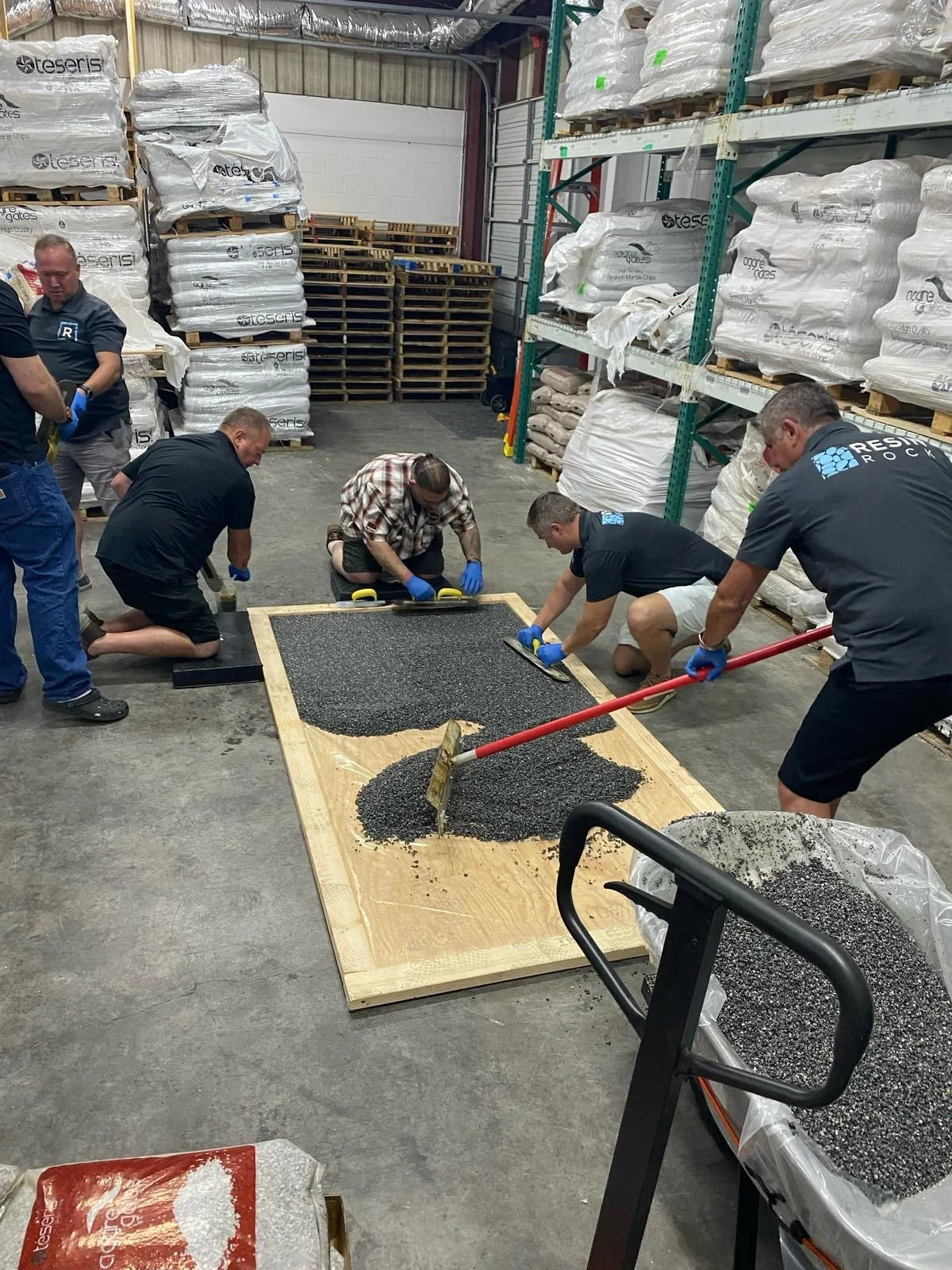
DIY vs Hiring an Approved Installer: What You Save, What You Risk
Resin-bound surfacing looks simple from the outside: mix resin + aggregate, lay it down, trowel it smooth, done. But in real-world installs, the difference between a surface that looks amazing for years and one that fails early usually comes down to preparation, timing, and technique.
So should you DIY, or hire an approved installer?
This guide breaks down what you can realistically save, what you risk, and how to choose the best route for your project.
The quick answer
-
DIY can save you labor costs, especially on small, low-risk areas.
-
Professional installation reduces the risk of costly mistakes, especially on driveways, sloped areas, and anything exposed to heavy weather or vehicle loads.
If you want an installer option right now: Find an Approved Installer
What you save with DIY (and where it’s realistic)
DIY savings usually come from labor, not materials.
Typical DIY “wins”
Lower labor cost (you’re the workforce)
Flexible schedule (work weekends, split into phases)
Good option for small areas (paths, small patios, garden features)
DIY is most realistic for:
- Small patios
- Walkways
- Decorative, low-traffic areas
- Projects with easy access, flat surface, and good weather window
What you risk with DIY (the part most people underestimate)
1) Base prep mistakes (the #1 cause of failure)
If the base is unstable, cracked, holds water, or isn’t built correctly, the resin surface can fail even if your finish work looks good on day one.
Common DIY base issues:
- Laying over a base that moves or cracks
- Poor drainage / standing water
- Weak edges (where failure often starts)
If you’re planning a full driveway build, base design matters a lot more than the resin layer.
2) Mixing and timing errors (resin is not forgiving)
Resin-bound has a working time. If your mix is off, or your troweling is slow, you can end up with:
- Batches curing at different rates
- Visible “seams” between mixes
- Uneven texture or sheen
- Weak bonding in certain zones
3) Wrong thickness or wrong system for the use-case
A walkway and a driveway are not the same job. Vehicle load needs the right thickness, correct base support, and edge restraint. DIY driveways are where most expensive mistakes happen.
4) Visual issues that are hard to fix later
Even if the surface is “okay,” DIY mistakes often show up as:
- Color inconsistency
- Patchy finish
- Trowel marks / ripples
- Loose aggregate areas
- Edges that look unfinished
And once resin cures, “touch-ups” don’t always blend cleanly.
5) Total cost can become higher than hiring a pro
Here’s the harsh reality: if DIY goes wrong, the fix can mean removal + rebuild, which costs more than hiring an installer from the start.
DIY vs Installer: a simple comparison table
- DIY may be right if:
- Your area is small and low-traffic
- Your base is already solid and properly draining
- You’re confident with mixing, timing, and troweling
- You accept that the finish may not look “showroom perfect” on your first attempt
Hiring an approved installer is usually better if:
- It’s a driveway (vehicles + turning forces)
- The area is sloped, has drainage challenges, or poor access
- You want the cleanest finish and fewer risks
- You’re investing in curb appeal (front of home / commercial entrance)
What a professional installer gives you (beyond “labor”)
A good installer isn’t just laying material—they’re reducing risk:
- Correct base evaluation and prep plan
- Proper edging and transitions
- Consistent mixing + batch control
- Fast, clean installation within working time
- Better finish consistency
- Accountability and experience
If you want to compare options in your area: Find an Approved Installer
If you still want DIY: do this first (the smart approach)
Step 1: Start with a small test area
Before you do a driveway, practice on:
- A small path
- A side patio section
- A low-visibility area
Step 2: Get trained (seriously)
Training reduces the “unknown unknowns” that cause failures (base rules, mixing discipline, timing, finishing technique). Installer training here
Step 3: Estimate correctly (don’t under-order)
Under-ordering causes the worst DIY problem: stopping mid-job and restarting later.
Use a calculator/estimator before you begin
Step 4: Use proper planning resources
Guides and documentation help you avoid basic setup mistakes.
FAQs
Can I DIY a resin-bound driveway?
You can, but it’s the highest-risk DIY option because driveways require correct base build-up, thickness, edges, and fast consistent installation across a large area. If you want DIY, start small and consider training first.
Is hiring an installer always more expensive?
Up front, yes—because labor is included. But hiring a good installer can be cheaper long-term if it prevents a redo.
What’s the biggest mistake DIY people make?
Base prep and timing. Most surface issues start underneath (movement, drainage, edges), and most finish issues come from working time, batch control, and trowel technique.
Final recommendation
If your project is small and low-risk, DIY can be a smart way to save money—especially if you practice first and follow proper guidance. But if it’s a driveway, high-visibility area, or anything with drainage challenges, hiring an approved installer is usually the best investment.
Next steps:
- Find an approved installer: https://resinrockllc.com/pages/find-an-installer
- Learn the process (training): https://resinrockllc.com/pages/training
- Plan quantities (calculators): https://resinrockllc.com/pages/calculators
If you tell me what you’re writing this for (driveway vs patio vs walkway), I can add a tight “Who this is for” section and a stronger CTA tailored to that surface.
Share:
Do Weeds Grow Through Resin-Bound Driveways? The Truth + Prevention
Resin-Bound for Pool Decks: Slip, Heat, Barefoot Comfort & Chlorine